
LPC Insights · Canada–EU trade
Canada–EU Free Trade: Can Canadian Cannabis Be Exported to Europe?
Canada and the European Union announced closer cooperation on October 30, 2026. What does that actually change for Canada's cannabis industry—and what remains prohibited?
Published: October 30, 2026 · By: LPC Editorial · Independent analysis, with original government sources
The short answer
Free trade does not mean unrestricted cannabis trade.
Canada and the EU already have a trade agreement known as CETA. Their new Alliance for the Future proposes deeper cooperation, including on trade barriers and regulatory standards. But neither the agreement nor the announcement automatically permits recreational cannabis exports. Canadian import/export permissions for cannabis remain restricted to medical or scientific purposes and require applicable permits and destination-country authorization.
Read the official October 30 joint statement from the Prime Minister of Canada and Health Canada's cannabis import/export rules.
What did Canada and the EU announce?
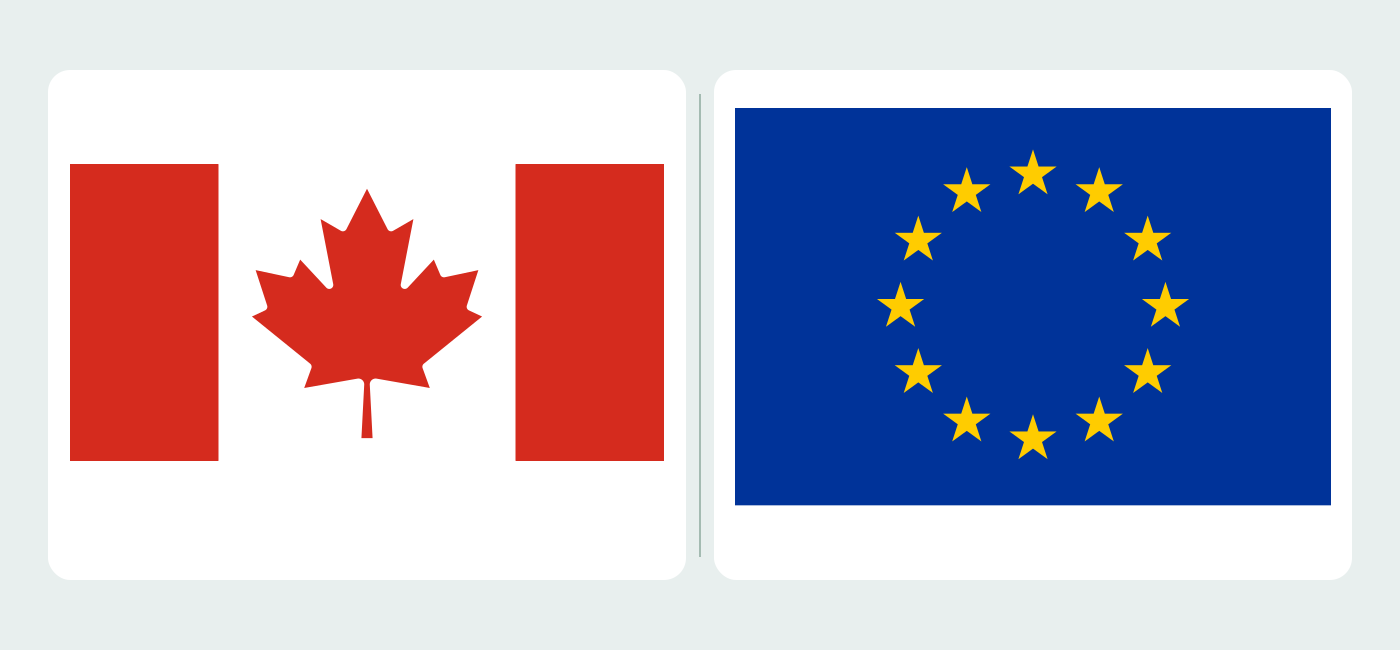
At their October 30, 2026 summit in Montréal, Canadian and European leaders launched an Alliance for the Future. The joint statement describes plans for closer trade and regulatory cooperation, research, technology, supply chains, investment and other areas. It builds on CETA; it does not announce a cannabis-specific free-trade regime.
The distinction matters: a commitment to discuss regulatory barriers is not the same as a change to Canadian export law or to an EU member country's cannabis rules. The full official statement is the original source for what leaders announced.
What is CETA?
The Comprehensive Economic and Trade Agreement (CETA) is Canada's existing trade agreement with the European Union. Its provisional application began in 2017. CETA supports trade in many goods and services, but businesses still must comply with laws governing controlled substances, product approvals, import permits and national market entry. See the European Commission's official CETA information.
Can a Canadian licensed producer export medical cannabis to Europe?
It may be possible in accordance with medical or scientific export rules. A Canadian cannabis licence alone is not a shipment permit. Health Canada specifies import/export requirements, and individual cannabis shipments require permits. The importing country must also authorize the shipment under its applicable rules. The precise requirements depend on the product, participants, destination and intended use.
Anyone evaluating such a transaction should check Health Canada's current guidance and the destination country's competent authority before treating a shipment as lawful. LPC does not certify export readiness or provide legal clearance.
Does CETA permit recreational cannabis exports?
No general authorization follows from CETA or the new alliance. Canada's adult-use cannabis framework is not an international recreational export licence. European cannabis laws are not uniform, and domestic reforms in one country should not be assumed to permit cross-border commercial recreational supply.
For national differences, consult the European Union Drugs Agency's original overview.
What about CBD and hemp?
Labels alone do not determine legal classification. Requirements vary with composition, intended purpose, jurisdiction and the applicable cannabis or hemp regime. A product described as CBD or hemp is not automatically exempt from Canadian export rules or European import and sale requirements.
Why should Canadians care?
The new alliance could lead to further discussions on research, regulated medical supply chains and international standards. Those are possibilities, not announced cannabis-market approvals. Clear information helps the public separate meaningful policy developments from industry speculation.
For independent health information, see LPC's Cannabis Education and Wellbeing guide. For context on international policy, read Global Cannabis Policy.
What should the Canadian industry watch next?
The useful developments to monitor are actual regulations, regulator notices, medical/scientific import pathways, country-specific authorizations and documented research initiatives. Canadian producers, testing laboratories, compliance advisors and researchers may find that information valuable, without needing to assume the alliance has removed controlled-substance restrictions.
Explore organizations in LPC's Canadian cannabis industry directory, research-oriented information on For Industry, and our editorial standards in LPC Editor.
Primary sources · reviewed October 30, 2026
Official references
- Prime Minister of Canada — Canada and EU Alliance for the Future (October 30, 2026)
- European Commission — EU–Canada trade agreement (CETA)
- Health Canada — Cannabis import and export requirements
- EU Drugs Agency — Medical and commercial cannabis-derived products
This is general public information, not individual medical, legal, investment or import/export advice. Always consult the currently effective rules and the relevant regulator.